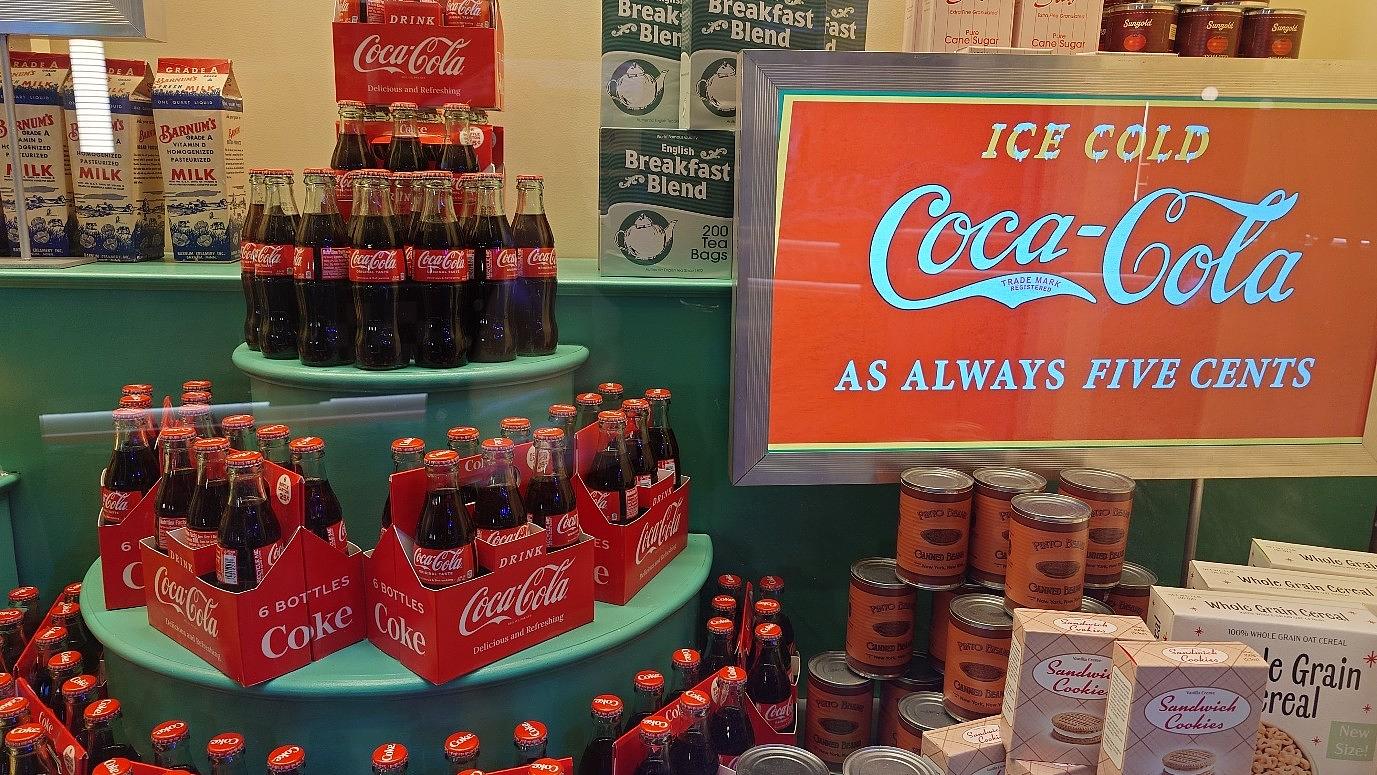
Walk into almost any supermarket in the world — from Hong Kong to London, Paris to New York — and you’ll see the iconic unmistakable red label.
Coca‑Cola isn’t just a soft drink. It’s a cultural symbol, a marketing masterclass, and one of the most valuable brands on Earth.
From supplying American soldiers in World War II to sponsoring the 2026 FIFA World Cup, Coca‑Cola has spent 140 years attaching itself to moments that matter.
From Pharmacy Counter to Global Giant

Coca‑Cola was invented in 1886 in Atlanta, Georgia, by pharmacist Dr. John Pemberton. Originally sold as a soda fountain tonic for five cents, it quickly gained popularity thanks to bold advertising and nationwide distribution.
Today, Coca‑Cola products are sold in more than 200 countries and territories, making it one of the most recognized consumer brands in history.
The company now generates approximately $47–48 billion in annual revenue, with an estimated market value exceeding $350 billion in 2026.
World War II: The Moment That Globalized Coke

Coca‑Cola’s transformation into a global brand accelerated during World War II.
In 1941, company president Robert Woodruff pledged that every American serviceman would be able to buy a Coke for five cents, wherever they were stationed.
To fulfill that promise, Coca‑Cola:
- Built 64 bottling plants near military bases overseas
- Shipped ingredients worldwide
- Supplied billions of bottles to troops
Coke became “a taste of home.”
When the war ended, those bottling plants remained — giving Coca‑Cola a ready-made international infrastructure. WWII didn’t just boost morale; it permanently expanded Coca‑Cola’s global footprint.
Battlefield to the Football Pitch: The 2026 World Cup

Fast forward to 2026, and Coca‑Cola is once again embedded in a defining global event: the FIFA World Cup hosted by the United States, Canada, and Mexico.
Coca‑Cola has been an official FIFA partner since 1978, making it one of the tournament’s longest-standing sponsors.
For the 2026 World Cup, Coca‑Cola:
- Serves as an official global sponsor
- Launches limited-edition packaging
- Activates large-scale fan zone campaigns
- Runs digital and retail promotions tied to football
Major sporting events allow Coca‑Cola to associate itself with unity, celebration and joy — the same emotional themes it has leaned on for decades.
The Secret Recipe: Marketing Magic in a Vault

Few corporate secrets are as famous as Coca‑Cola’s formula. Originally, the ingredients were cocoa leaves and kola nuts formulated to cure minor ailments such as headaches and tiredness.
Now often referred to as “Merchandise 7X,” the recipe is reportedly stored in a secure vault in Atlanta. There remains apparently only a very small number of people in the inner circle who know the complete formula at any point of time.
Over the years:
- Competitors have attempted to reverse‑engineer it
- Copycat brands have tried to replicate the taste
- In 2006, insiders even tried to sell trade secrets (and were caught)
Despite endless attempts, no one has been able to duplicate the exact flavour and consistency.
That mystery and intrigue fuels curiosity and reinforces brand loyalty.
How Much Coca‑Cola Is Sold Each Year?

Coca‑Cola reports that more than 2.2 billion servings of its beverages are consumed every single day worldwide.
That equates to over 800 billion servings annually across its global portfolio.
Coca‑Cola (the original cola product alone) remains the company’s flagship and one of the most consumed soft drinks in the world.
Where Is Coca‑Cola Consumed the Most?

Coca‑Cola is global — but consumption patterns vary.
Revenue by Region (Approximate)
- North America: ~34–35%
- Europe, Middle East & Africa: ~30%
- Asia Pacific: ~25%
- Latin America: ~10–12%
Nearly two‑thirds of Coca‑Cola’s revenue comes from outside the United States.
Top Consumer Countries
By volume and per‑capita consumption:
- Mexico – Among the highest per‑capita consumption globally
- United States – Largest overall revenue market
- Brazil
- China
- Japan
Mexico is frequently cited as the highest per‑capita consumer of Coca‑Cola products worldwide.
Market Share: Coca‑Cola vs Pepsi

The famous “Cola Wars” continue, but Coca‑Cola maintains a dominant global position.
Global Carbonated Soft Drink Market Share
- Coca‑Cola Company: ~48%
- PepsiCo: ~20%
- Other brands: ~32%
In the United States:
- Coca‑Cola controls roughly 42–43% of the carbonated soft drink market
- PepsiCo holds approximately 30–31%
PepsiCo earns higher total revenue due to its snack brands, but Coca‑Cola often leads in pure cola brand dominance worldwide.
Clever Marketing That Keeps Sales Growing

Coca‑Cola doesn’t just rely on tradition. It adapts.
1️.“Share a Coke”
By replacing its logo with popular names, Coca‑Cola made mass production feel personal. Consumers searched for their names, shared photos online, and bought bottles as gifts.
Sales rose significantly in multiple markets, especially among younger demographics.
2️. Smaller Packaging Strategy
As health awareness grew, Coca‑Cola introduced:
- Mini cans
- Smaller bottle formats
- Portion-controlled packaging
This allowed consumers to enjoy Coke in moderation while keeping the brand in their shopping carts. Smaller packages also often carry higher margins per ounce — boosting profitability.
It’s a subtle but powerful strategy: sell less liquid per unit, but increase overall brand presence.
Why Coca‑Cola’s Red Branding Works So Well

Coca‑Cola’s red isn’t accidental but is in fact a brilliant marketing tactic.
Red is associated with:
- Energy
- Excitement
- Appetite stimulation
- Urgency
Psychologically, red draws attention quickly, making Coca‑Cola stand out on crowded supermarket shelves.
The consistency of its red-and-white colour scheme for over a century has reinforced recognition across cultures and languages. Even in markets where English isn’t spoken, the red alone signals “Coke” to the world at large.
Few brands have protected and leveraged colour identity as successfully.
Regular Coke vs Zero & Diet

- Coca‑Cola Original Taste remains the top-selling flagship.
- Coca‑Cola Zero Sugar is the fastest-growing variant globally.
- Diet Coke retains strong loyalty, particularly in North America and Europe.
By innovating without abandoning its classic formula, Coca‑Cola balances tradition with modern health trends.
How Coca‑Cola Sustains Its Popularity

Coca‑Cola has survived:
- World wars
- Economic crises
- Sugar backlash
- Intense competition
It has done so by mastering:
- Emotional storytelling
- Global event sponsorships
- Strategic expansion (especially post‑WWII)
- Product diversification (500+ brands including Sprite, Fanta, Costa Coffee, Minute Maid and Powerade)
- Packaging innovation
Even people who don’t drink Coca‑Cola regularly may still buy other products from the Coca‑Cola portfolio, often not even knowing that it’s part of the coca cola group.
The Real Formula for Success

The secret recipe obviously matters.
But Coca‑Cola’s real formula is:
- Be present at historic moments (WWII, World Cups)
- Stay emotionally relevant
- Adapt packaging and products
- Maintain brand consistency
- Protect the mystique
From soldiers seeking a taste of home in the 1940s to football fans celebrating goals in 2026, Coca‑Cola has mastered the art of belonging everywhere.
May be that is why after 140 years, it is not seen as just a drink.
It’s part of global culture.