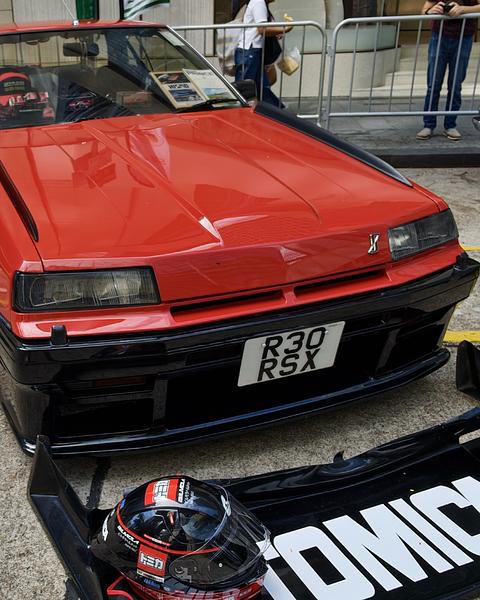
When I was a young child growing up in England, there was no internet, no mobile telephones, no electronic calculators, no PCs, tablets or electronic games consoles. There were far fewer cars on the road, and ordinary people did not usually own a car or even have a telephone installed in the house. The largest medium of entertainment in my childhood was the radio, often a large valve-driven set in a wooden cabinet. Televisions were only just beginning to find their way into ordinary homes, and even then they had small black-and-white screens.

Household appliances were limited too. Washing was often done by hand in a sink or large boiler, then squeezed through a mangle before being hung outside to dry. Most families had less money than today, so in winter only the fire in the main living room was regularly lit. The rest of the house was often cold, with draughty windows and doors, and no such thing as loft insulation. As a result, families tended to remain together in the living room until bedtime. Looking back, that closeness was not such a bad thing.

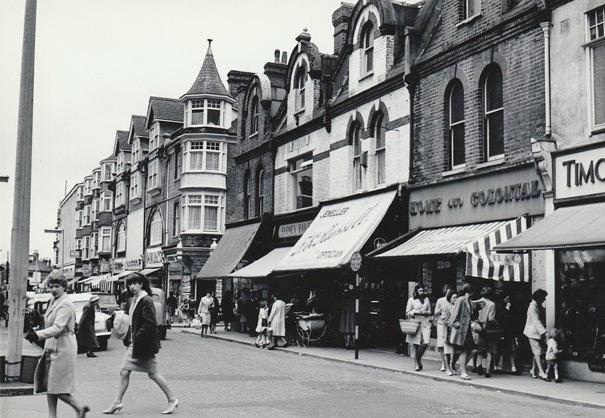
Food was mainly what was grown or produced in Britain, and therefore seasonal. Potatoes, cabbage, carrots, turnips, onions, leeks and sprouts were common staples. Shopping did not mean driving to a supermarket with endless choices. It usually meant walking, cycling or taking the bus to the high street and visiting the butcher, greengrocer, fish shop, chemist, newsagent and baker. Fast food, apart from fish and chips, was almost unknown, and foreign cuisine was rare.
From this description, one might think life in the 1950s and 60s was bleak, but that was not how it felt to me. Britain was still recovering from the Second World War, and most families relied on one income, yet we were happy. Life was more tactile, more local and more communicative. We knew our friends, family and neighbours, and there was a real sense of community and belonging.
Sunday was very different then. It was a day of rest, church and family. Most shops were closed, towns were quiet, and Sunday lunch, however modest, was a regular family routine, if not a ritual. Today, Sunday has rather become “Saturday 2”. There is more choice, more money, more technology and more freedom, but not every change has been an improvement.
Children entertained themselves very differently. We played outside, made up games and used our imagination. In the playground there were games such as Hee and British Bulldog. These were essentially chasing games. With Hee, one person was “It” and would try to catch the others by touching them. Once touched, they were also “It”, and so the number of children being chased reduced as the number of chasers increased, until there was only one left — the winner.
British Bulldog was very similar, except there were two lines that were safe zones, with players running between them while catchers waited in the middle. A catcher had to catch a runner, lift them and call out, “British Bulldog 123!” The captured person would then become a catcher, so again the number of catchers increased while the number of runners reduced.
Outside school there were similar games such as Knock-Knock. There was a tree in our local woods which we designated the Knock-Knock tree. One person would count out loud from 1 to 100 while the others went to hide. The idea was to get back to the tree without being spotted by the catcher, who also had to return to the tree first to catch the hider. If the hider got there safely, they would call out, “Knock-Knock home 123!” It was great exercise, and along with football played with a tennis ball, skipping, tree climbing and exploring, most kids were very fit. Most of us walked daily to and from school, often more than a mile, and friendships and routines were quickly established.

Cards were also very popular during the 50s and 60s. Cigarette cards, Brooke Bond tea cards and Lipton tea cards were all collectibles, and a number of games were played to win cards from opponents. Flicks was a common game where two or three cards were placed angled against a wall. From behind a chalk line, about six feet away, players flicked other cards to try and knock them down. The winner would gain the cards that had been played.


Toys were simpler but much loved: cap guns, Airfix Spitfires and Hurricanes, balsa wood gliders, Matchbox cars and Corgi toys. We also made bows and arrows from hedges and spent hours on the common flying gliders or chasing after them as they swooped and landed.

Today’s children have many advantages, but I sometimes feel they have lost something important. Many spend more time indoors with phones, games consoles and social media. Communication is often written on a screen rather than spoken face to face. In my generation, children learned banter, humour, eye contact and body language. We learned how to give and take a joke, and how to deal with one another directly.
Of course, the past was not perfect, and I do not wish to go backwards. Many changes have been positive, especially in knowledge, opportunity, medicine and comfort. But I do think some values are worth carrying forward: practical skills, resilience, neighbourliness, tolerance, conscience, respect and real conversation.
Perhaps every generation worries about the next one. Still, I hope we can keep the best of both worlds: the opportunity and technology of today, together with the community spirit, imagination and simple human warmth that I remember from then.